Calm kids, healthy smiles — a foundation for life.
Pediatric dentistry covers the healthy development of baby and permanent teeth, the transition between them, and the early diagnosis of any issue that may arise. At Dentomed Dental Clinic in Trabzon, your child is welcomed by a board-certified pediatric dentist (pedodontist) — the dental chair becomes a place your child remembers fondly.
Why your child needs a pediatric dentist in Trabzon
Baby teeth are often dismissed as "they'll fall out anyway" — but they guide the developing permanent teeth below. A baby tooth lost too early can push adult teeth out of position and cause crowding. Choosing a pediatric dentist (pedodontist) in Trabzon for your child's first visit prevents much bigger treatment needs later on.
Pediatric dentistry isn't just treatment; it's the art of introducing kids to the dentist through play so they grow up without dental anxiety. At Dentomed's central Trabzon clinic, Dr. Dt. Tülay Çakmak and our team guide both your child and you through every step.
Care by age stage
Each stage has its own priorities — the right step at the right time.
Infancy
The first tooth appears around 6 months. All 20 baby teeth are in by 24 months. Bottle decay is the major risk — nothing but water at night.
- First meet-and-greet
- Bottle decay prevention
- Teething comfort
Pre-school
Full baby dentition. The child starts brushing but parent follow-up is essential. Thumb-sucking and pacifier habits monitored. Fluoride varnish begins.
- Fluoride varnish
- Brushing coaching
- Habit monitoring
School age — mixed dentition
Baby teeth exfoliate, adult teeth erupt. Fissure sealants protect new molars. An early orthodontic screening around age 7 is highly recommended.
- Fissure sealants
- Ortho screening
- Sports mouthguard
Pre-adolescence
All permanent teeth are through, except third molars. The best time for orthodontic treatment. Hygiene responsibility shifts fully to the teen — 6-monthly check-ups still required.
- Orthodontic planning
- Professional cleaning
- Independent hygiene
Our services
From prevention to emergency care — for every need your child has.
Periodic check-ups
Every 6 months. Early cavity detection, hygiene review, eruption tracking.
Fluoride varnish
Gel application to strengthen enamel. Every 6 months from age 3.
Fissure sealants
A flowable resin fills the deep grooves of molars. Prevents about 80% of cavities.
Cavity treatment
Colourful filling options for baby teeth. Letting kids choose the colour makes the visit fun.
Pulpotomy
Root-canal therapy on a baby tooth, keeping it in place until the adult successor arrives.
Space maintainers
A fixed or removable appliance holds the gap left by a lost baby tooth until the adult tooth erupts.
Trauma / emergency
Same-day response for chipped, broken or knocked-out teeth. Within 30 minutes an avulsed tooth can often be saved.
Orthodontic screening
Jaw growth is assessed at age 7. Early intervention often reduces or eliminates later braces.
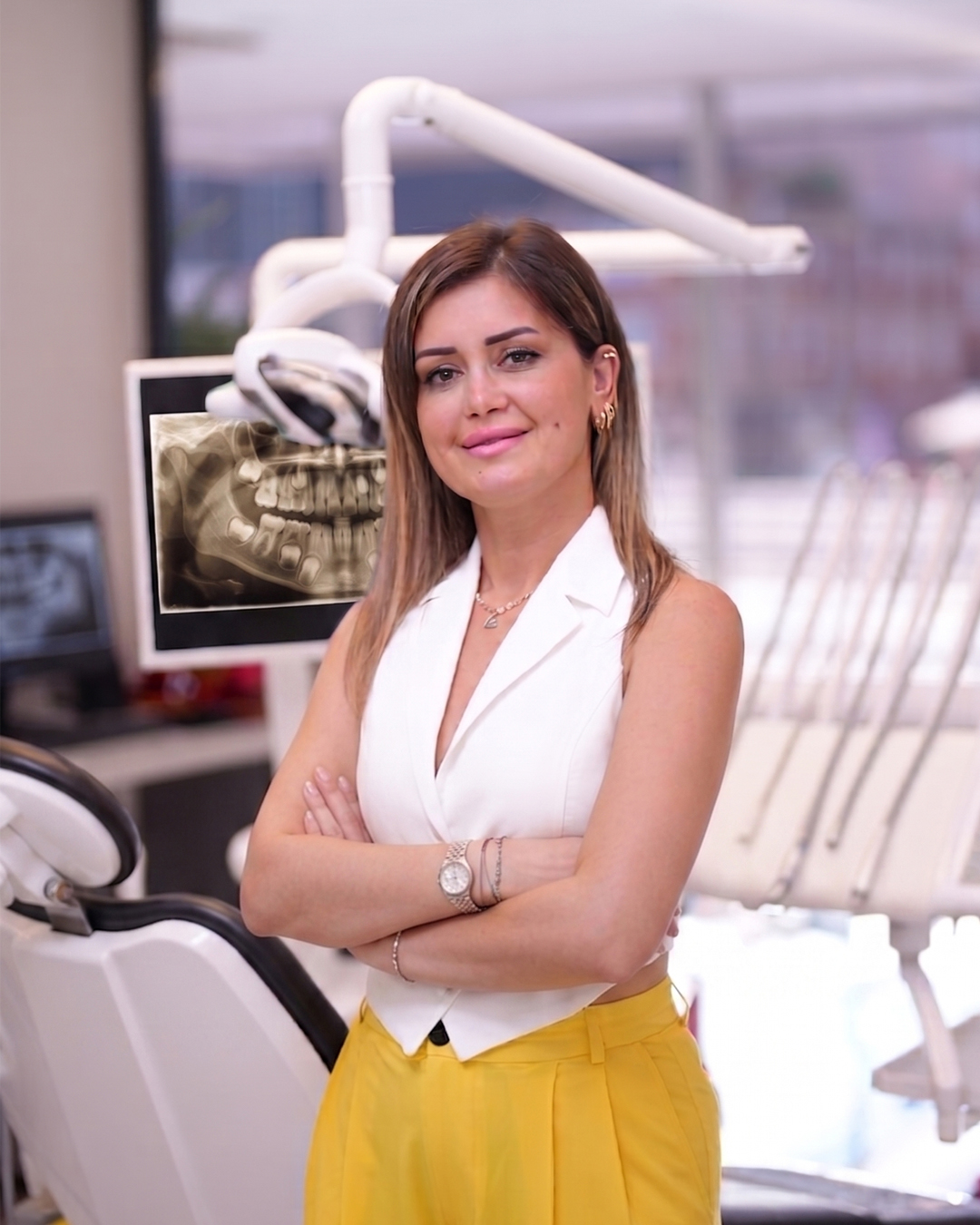
Dr. Dt. Tülay Çakmak — pediatric dentist in Trabzon
Your child's oral health is planned and delivered by a specialist pedodontist. Dr. Dt. Tülay Çakmak completed her doctorate and specialist degree in the Pedodontics Department of Karadeniz Technical University Faculty of Dentistry, and later served as Head of Pediatric Dentistry at RTE University. Since 2014 she has been part of Dentomed Trabzon — providing preventive dentistry, fissure sealants, fluoride therapy and early orthodontic evaluation for children aged 0–14.
- 13+ years of pediatric dentistry experience
- Member of the Turkish Association of Paediatric Dentistry
- Central Trabzon · KTÜ Pedodontics doctorate
- Published research on pediatric dental trauma
First visit: meeting, playing, trust
The first appointment is not treatment — it's a relaxed meet-and-greet.
It starts at home
Avoid words like "doctor", "needle" or "pain" in the run-up. Let them bring a favourite toy.
Meeting through play
Sit in the chair, meet the mirror, try the little air puffer. The child befriends the equipment first.
A gentle look
Parent right next to the chair. We count teeth as a game — no force, no surprises.
Ending with a treat
A little gift, a sticker, a scorecard. Your child leaves asking "when can we come back?"
Calming anxiety — our approach
At Dentomed we use the Tell-Show-Do method — explain, demonstrate, then perform.
Tell
Everything we'll do is explained in words the child understands. No surprises.
Show
We demonstrate on the child's fingernail — they hear the sound, feel the "tickle".
Do
We only proceed when the child is ready. When they say "stop" we really stop — that's how trust is built.
Parent guide — at-home care
Beyond the clinic, the daily routine makes the biggest difference.
Brushing by age
Ages 0-3: rice-grain of fluoride toothpaste · 3-6: pea-sized · 6+: thin strip. Parents assist until age 8.
Night routine
After the last brushing, nothing but water — even milk causes cavities. Bottle at bedtime is the single biggest risk.
Sugar & acid
Packaged juices and sodas are the worst. Swap for water, milk, fresh fruit. Snack on crunchy fruit, not candy.
Habits
Thumb-sucking past age 4 starts to shape the jaw — it should stop before age 6. Pacifiers until age 2, then goodbye.
Be the model
Kids imitate parents. Brush together. Dental anxiety often comes from the family — set a positive example.
Emergency: knocked-out tooth
If a permanent tooth is out, place it in milk and call us immediately. Reimplanted within 30 minutes, it can be saved.
Bottle decay — the biggest threat
One of the most common and costly misconceptions. Easy to prevent.
- Never put baby to sleep with a bottle of anything but plain water
- Stop the bottle around 12-14 months (with paediatrician's approval)
- During the day, never use a bottle of non-water to soothe
- Don't dip pacifiers in sugar, honey or molasses
- Don't add sugar to baby food
- After every feed, wipe teeth and gums with a damp cloth or soft brush
Frequently asked questions
What parents ask us most.